
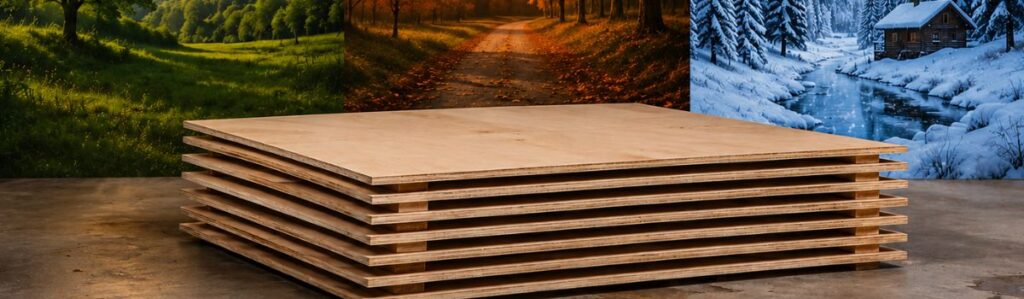
India’s climate is not one story—it is many. From the cold, dry winters of Kashmir to the humid, rain-heavy environment of Kerala, materials behave very differently depending on where they are used. Plywood, in particular, responds directly to temperature, moisture, and air quality.
That is why choosing plywood without considering climate often leads to early damage, swelling, or structural issues. Understanding how plywood performs across regions helps homeowners, architects, and builders make smarter, longer-lasting decisions.
Plywood is made from layers of wood bonded together. Wood naturally reacts to its surroundings. It expands in moisture, contracts in dry air, and can weaken under extreme temperature changes.
Across India, three environmental factors affect plywood the most:
When these are ignored, even well-designed interiors can fail sooner than expected.
In regions like Kashmir, winters are long and temperatures can drop significantly. The air is relatively dry, especially indoors where heating systems are used.
In such conditions, plywood tends to:
For these climates, stability matters more than water resistance. Plywood used here should maintain its shape despite temperature variation.
Interiors such as wardrobes, wall panels, and furniture benefit from plywood that resists cracking and holds joints firmly even in dry air.
Cities like Delhi, Jaipur, and Lucknow experience extreme summers and moderate winters. The climate shifts between dry heat and occasional humidity during monsoon.
Here, plywood must handle:
Versatile plywood that balances strength and moderate moisture resistance works best in these regions.
Coastal regions face the toughest conditions for plywood. High humidity levels, salt-laden air, and long monsoons create constant exposure to moisture.
In these environments, plywood is at risk of:
This is where high water-resistant plywood becomes essential. Kitchens, wardrobes, and utility spaces especially need materials that can withstand continuous humidity.
Kerala represents one of the most demanding climates for interiors. Humidity levels often remain above 80%, and rainfall is frequent and intense.
In such conditions:
Waterproof plywood performs significantly better here. It prevents moisture penetration and maintains structural strength even during prolonged exposure to damp conditions.
Cities like Bangalore fall somewhere in between. While temperatures are moderate, the monsoon brings consistent moisture and humidity.
The challenge here is not extreme conditions, but prolonged exposure to mild moisture. Over time, this can still damage interiors if the wrong plywood is used.
This is why many homeowners prefer moisture-resistant or waterproof plywood even in relatively moderate climates.
| Region | Key Climate Factor | Common Plywood Issue | Recommended Approach |
| Kashmir | Cold and dry | Shrinkage, cracks | Dimensionally stable plywood |
| North Plains | Heat + seasonal humidity | Expansion and contraction | Balanced performance plywood |
| Coastal Cities | High humidity + salt air | Swelling, fungus | High water-resistant plywood |
| Kerala | Extreme humidity + rain | Rapid deterioration | Waterproof plywood |
| Bangalore | Moderate + monsoon moisture | Slow swelling over time | Moisture-resistant plywood |
This table shows that plywood selection should always align with local climate conditions rather than a one-size-fits-all approach.
When plywood matches the climate, it delivers clear benefits:
Ignoring climate leads to repeated repairs, replacements, and unnecessary expenses.
Along with choosing the right plywood, a few practical steps improve performance across all climates.
Proper ventilation reduces moisture buildup. Keeping furniture slightly away from walls prevents damp transfer. Sealing edges and using good laminates protects surfaces from environmental exposure.
These simple decisions can extend the life of interiors significantly.
While climate plays a major role, consistency in plywood quality is equally important. Uniform bonding, strong core material, and reliable performance ensure that the plywood behaves as expected in different environments.
Manufacturers like SomaniPly design plywood solutions suitable for varied Indian climates, helping homeowners and professionals achieve better durability across regions.
From the cold valleys of Kashmir to the humid landscapes of Kerala, plywood performance changes with climate. What works in one region may fail in another.
Understanding these differences allows you to choose the right material for the right environment. It is a simple shift in approach, but it makes a significant difference in durability, cost efficiency, and overall interior quality.
For anyone planning interiors across India, climate-aware plywood selection is not just a technical detail—it is a long-term investment in better living spaces.
Yes. Moisture, temperature, and humidity directly impact plywood strength, stability, and lifespan.
Water-resistant or waterproof plywood performs best in high-humidity areas like coastal cities and Kerala.
Dry air and low temperatures can cause shrinkage, leading to minor cracks in low-quality plywood.
Not always. Different climates require different performance characteristics.
Ensure proper ventilation, avoid moisture exposure, seal edges, and choose high-quality materials.
It reduces risks significantly, but proper installation and maintenance are still important.