
Best Plywood for Schools, Desks and Classroom Furniture
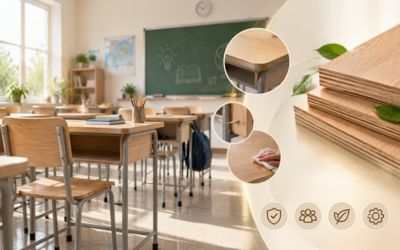
Best Plywood for Schools, Desks and Classroom Furniture School furniture must handle daily use, frequent movement, heavy books, spills, scratches, and constant opening and closing. Desks, benches, cupboards, laboratory tables and library shelves are used by many students every day, so the plywood selected for these applications must be strong, stable and easy to maintain. The best plywood for school furniture depends on the furniture type, expected load, moisture exposure, safety requirements and budget. Choosing the correct grade and thickness can reduce repairs, improve student safety and increase the usable life of classroom furniture. Why Plywood Quality Matters in Schools School furniture is exposed to more wear than most residential furniture. A study table at home may be used by one or two people, while a classroom desk can be used by several students across different academic years. Poor-quality plywood may lead to: Bent or sagging desk surfaces Loose screws and fittings Chipped edges Broken shelves Swollen cabinet bases Peeling laminates Unstable benches Sharp, damaged corners Frequent maintenance costs Strong plywood helps furniture remain stable even under repeated use. What Makes Plywood Suitable for Classroom Furniture? Plywood used in schools should provide a combination of strength, dimensional stability, surface quality, and hardware-holding capacity. Important qualities include: Good resistance to bending Strong screw and nail holding Consistent thickness Proper bonding between layers Smooth surface for laminates or paint Resistance to edge chipping Moisture resistance Easy cleaning Low maintenance Suitability for repeated use The plywood should also be appropriate for the age group and the type of activity performed in the room. Best Types of Plywood for School Furniture Commercial or MR-grade plywood Commercial or moisture-resistant plywood may be suitable for furniture used in dry classrooms. It can be considered for: Student desks Teacher tables Classroom cupboards Notice-board backing Lightweight shelves Storage units Indoor partitions MR-grade plywood can handle normal indoor humidity, but it is not waterproof. It should not be used in areas exposed to regular water, plumbing leakage, or wet cleaning. BWR-grade plywood Boiling-water-resistant plywood offers better protection against moisture than standard commercial plywood. It may be suitable for: Frequently cleaned classroom desks School office furniture Library shelves Staff-room cabinets Laboratory storage away from sinks Furniture in humid locations Canteen storage units BWR plywood provides a useful balance between cost, durability and moisture resistance for many school applications. BWP-grade plywood Boiling-waterproof plywood is more suitable for areas with higher moisture exposure. It may be used for: Laboratory tables near sinks Washroom storage cabinets School kitchen furniture Canteen counters Cabinets below water points Utility-room furniture Furniture in areas with frequent floor washing BWP plywood may cost more, but it can reduce the risk of swelling and layer separation in wet conditions. Fire-retardant plywood Fire safety is important in schools because classrooms, corridors, laboratories, libraries and auditoriums are used by large groups of children. Fire-retardant plywood is treated to slow the spread of flame and reduce the speed of burning. It may be considered for: School auditoriums Libraries Laboratories Computer rooms Wall panelling Storage units Public-use furniture Interior partitions Fire-retardant plywood does not make furniture completely fireproof. The full building must still follow appropriate electrical, fire-exit and emergency-safety requirements. Best Plywood for Student Desks Student desks face continuous writing, movement, impact and cleaning. The top surface must remain flat and stable while supporting books, school bags and learning materials. For classroom desks, plywood should have: Good bending resistance Adequate thickness Smooth surface finish Strong edge protection Resistance to scratches Easy-clean laminate Secure fixing to the frame BWR-grade plywood may be suitable for many classroom desks because it offers better moisture resistance than basic commercial plywood. The final strength also depends on the metal or wooden frame, support spacing and desk design. Best Plywood for Classroom Benches Benches must support the weight of several students at the same time. Structural strength is therefore more important than decorative appearance. The plywood used for bench seats should: Have adequate thickness Be supported by a strong frame Resist bending Have smooth, rounded edges Hold screws securely Remain stable under repeated movement Be protected from floor moisture Very thin plywood should not be used for long bench seats because it may bend or crack. The bench design should include enough support points to distribute weight evenly. Best Plywood for Teacher Tables Teacher tables are used for books, computers, files, and classroom materials. They may also include drawers and storage compartments. Suitable plywood should provide: Strong tabletop support Good screw-holding capacity Smooth laminate finish Stable drawer construction Edge resistance Cable-management compatibility Easy maintenance Commercial or BWR plywood may be selected depending on room conditions and expected use. Best Plywood for Classroom Cupboards Classroom cupboards are used for books, teaching materials, sports items, stationery and student records. The plywood should hold hinges, locks and shelves securely. Important factors include: Strong hardware holding Shelf load capacity Stable shutters Proper back-panel support Moisture-resistant base Secure wall anchoring Rounded exposed edges Cupboards should be fixed to the wall where necessary to reduce the risk of tipping. Best Plywood for Library Shelves Library shelves must support heavy books for long periods. Books create a continuous load, which can cause weak shelves to bend. For library shelves: Use strong plywood Select adequate thickness Reduce long unsupported spans Add vertical partitions Use secure shelf supports Anchor tall units to walls Avoid overloading BWR plywood may be a practical option for library storage in most indoor conditions. The shelf design is just as important as the plywood grade. Even good plywood can bend if the shelf is too long and lacks support. Best Plywood for School Laboratories Science laboratories face chemicals, water, heat, equipment and frequent cleaning. Plywood for laboratory furniture should be selected carefully. BWP plywood may be considered for: Cabinets near sinks Work tables exposed to water Storage below plumbing lines Utility cabinets Wash areas The surface finish should also resist stains and repeated cleaning. Plywood should not be placed directly next to open flames, strong heat sources or areas where highly corrosive
How to Protect Plywood Furniture During the Indian Monsoon
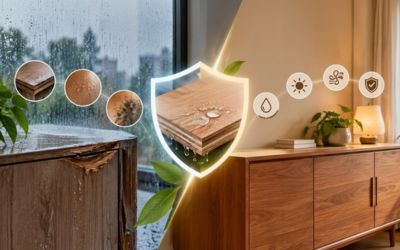
How to Protect Plywood Furniture During the Indian Monsoon The Indian monsoon brings relief from the summer heat, but it also creates serious problems for wooden and plywood furniture. High humidity, water leakage, and poor ventilation can cause plywood furniture to swell, develop mould, lose its polish, or produce an unpleasant smell. Plywood is generally strong and durable, but continuous exposure to moisture can weaken its layers. Proper care before and during the rainy season can help your wardrobes, kitchen cabinets, beds, tables and storage units remain in good condition for many years. Why Does the Monsoon Damage Plywood Furniture? Plywood is manufactured by bonding multiple thin layers of wood together. When plywood furniture is exposed to excess moisture, the wood layers can absorb water and expand. This may lead to: Swelling around furniture edges Peeling laminate or veneer Weakening of joints Mould and fungal growth Musty odours inside cupboards Difficulty opening drawers and doors Discolouration of the furniture surface Furniture placed near windows, exterior walls, balconies, bathrooms and kitchen sinks usually faces a higher risk of moisture damage. 1. Keep Furniture Away from Damp Walls During the monsoon, exterior walls may absorb rainwater and become damp. Plywood furniture placed directly against these walls can slowly absorb the moisture. Maintain a small gap of around two to four inches between the furniture and the wall. This allows air to circulate behind the furniture and reduces direct contact with damp surfaces. Pay special attention to wardrobes, bookshelves, shoe racks, and storage cabinets placed against exterior walls. 2. Improve Ventilation Inside the Room Poor air circulation allows humidity to remain trapped inside a room. Open windows whenever the rain stops and allow fresh air to enter. Ceiling fans and exhaust fans can also improve air movement. In rooms with high humidity, a dehumidifier can help control moisture levels. Avoid keeping rooms completely closed for several days, especially when large plywood wardrobes or storage units are present. 3. Check for Water Leakage Before the Rainy Season Small leaks can cause major furniture damage if they remain unnoticed. Before the monsoon begins, inspect the following areas: Window frames Balcony doors Ceiling corners Bathroom walls Kitchen plumbing Sink areas Air-conditioner drainage pipes Exterior walls Repair cracks and leakages early. Even small amounts of water entering regularly can damage the plywood base, edges and internal structure. 4. Protect Plywood Edges The edges of plywood furniture are more vulnerable because moisture can enter through unfinished or damaged sections. Check for open edges, peeling edge bands or cracked laminate. Seal exposed edges using suitable edge banding, wood sealant or waterproof coating. It is better to get damaged edges repaired by a carpenter before the moisture spreads into the inner plywood layers. 5. Use Moisture Absorbers Inside Wardrobes Closed cupboards and wardrobes often develop a musty smell during the monsoon. Moisture absorbers can help keep the internal space dry. You can use: Silica gel packets Activated charcoal bags Commercial moisture absorbers Camphor blocks Neem leaves in breathable cloth bags Replace or dry these materials regularly. Avoid placing wet clothes, damp towels or recently ironed clothes directly inside the wardrobe. 6. Do Not Clean Plywood with Excess Water Many people use a wet cloth to clean furniture. During the monsoon, this can increase moisture absorption, especially near edges and joints. Use a soft, slightly damp cloth for cleaning. Immediately wipe the surface using a dry cloth. Avoid pouring water, spraying cleaning liquid directly on the furniture or using harsh chemical cleaners. Select cleaning products that are suitable for laminate, veneer or polished wood surfaces. 7. Apply a Protective Polish or Coating A good-quality polish, varnish or protective coating can create a barrier between the furniture surface and moisture. The type of coating depends on the furniture finish: Furniture surface Suitable protection Laminated plywood Edge sealing and regular dry cleaning Veneer furniture Wood polish or protective varnish Painted plywood Moisture-resistant paint coating Exposed plywood Waterproof sealant or wood coating Before applying any product, test it on a small hidden area. Professional polishing may be required for premium or old furniture. 8. Keep Furniture Raised from the Floor Rainwater, plumbing leaks and regular floor cleaning can expose the furniture base to moisture. Use furniture legs, rubber pads or plastic protectors to prevent direct contact between the plywood and the floor. This is particularly important for shoe racks, kitchen cabinets, storage boxes and wardrobes. Do not allow water to collect below furniture after mopping. Wipe the floor dry and ensure proper airflow. 9. Avoid Covering Furniture with Plastic for Long Periods Plastic covers may protect furniture from direct water, but they can also trap humidity. When moisture remains trapped under the cover, it may encourage fungal growth. Use breathable fabric covers instead. When plastic protection is necessary, remove it regularly and allow the furniture to air out. Never cover furniture while its surface is wet. 10. Check Furniture Regularly for Mould Mould usually appears as black, green, white or grey patches. It may develop behind furniture, inside closed cupboards or around damp corners. Inspect furniture every few days during heavy rain. Clean small mould patches using a suitable furniture-safe cleaner and dry the area completely. Wear gloves and a mask while cleaning mould. If the growth is extensive or keeps returning, identify the moisture source and seek professional help. 11. Take Special Care of Kitchen Plywood Furniture Kitchen cabinets face moisture from water, steam, oil, and plumbing leaks. Check the area below the sink frequently because slow pipe leakage can remain unnoticed. Keep sink cabinets dry and avoid storing wet cleaning cloths inside them. Use waterproof mats or trays below cleaning products and water containers. Ensure the kitchen has a functional exhaust fan or chimney to reduce steam and humidity. 12. Use the Right Type of Plywood in Moisture-Prone Areas Furniture protection becomes easier when the correct plywood is selected during construction. For dry indoor spaces, standard interior-grade plywood may be suitable. For kitchens, bathrooms, utility areas and other moisture-prone locations, moisture-resistant
How to Protect Shuttering Plywood Edges for Longer Performance and Reuse
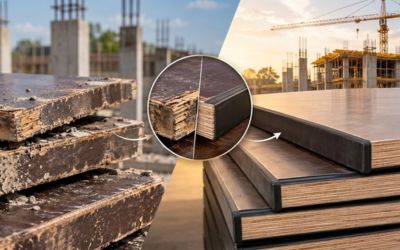
How to Protect Shuttering Plywood Edges for Longer Performance and Reuse Shuttering plywood is a key material in concrete construction and is commonly used to form slabs, beams, columns, walls, and other structural components. While much attention is usually given to the quality and finish of the plywood surface, the edges are equally important. The edges of shuttering plywood are particularly exposed to moisture, water, cement slurry, and other site conditions. If they are left unprotected, they can absorb moisture, swell, separate, and gradually lose their strength. This can reduce the number of times the plywood can be reused and increase replacement expenses. Proper edge protection helps preserve the plywood’s dimensions, improve durability, extend its working life, and reduce unnecessary construction costs. What Does Edge Protection Mean for Shuttering Plywood? Edge protection refers to sealing or coating the exposed edges of a plywood sheet to prevent moisture and other materials from entering its internal layers. Depending on the application, contractors may use waterproof paints, acrylic sealants, polyurethane coatings, epoxy coatings, or other suitable edge-sealing products. Film-faced shuttering plywood normally has a protective film covering its main surfaces. However, when the sheet is cut, drilled, or modified at the construction site, the newly exposed sections may no longer have this protection. These exposed areas can allow water and cement slurry to penetrate into the plywood’s internal veneer layers, potentially causing damage over time. Why Do Shuttering Plywood Edges Need Extra Protection? Shuttering plywood consists of several thin layers of wood veneer bonded together with adhesive. While the main faces may be protected by a phenolic film, the edges expose the internal veneer layers. When these layers come into contact with moisture, they can absorb water and expand. Continued exposure may result in several problems, including: Swollen edges Separation between veneer layers Delamination Uneven surfaces Loss of dimensional stability Reduced reuse potential Poor concrete finishing Reduced strength around nails and screws In many cases, deterioration starts at the exposed edge and gradually moves inward toward the rest of the panel. 1. Helps Prevent Moisture From Entering the Plywood Water is a regular part of concrete construction. Shuttering plywood may come into contact with water from concrete mixtures, curing operations, rainfall, cleaning activities, or improper storage. Unprotected edges can absorb moisture rapidly. Once water enters the veneer layers, the edges may swell and become uneven. Applying an appropriate edge sealant creates a protective barrier that limits water penetration. This helps the plywood retain its original thickness, dimensions, and shape through repeated construction cycles. 2. Helps Minimise Delamination Delamination occurs when the individual layers of plywood begin separating from one another. It is one of the major causes of shuttering plywood failure. When moisture enters through exposed edges, it can weaken the adhesive bonds holding the veneers together. Repeated exposure to moisture, sunlight, construction loads, and other site conditions can make the problem progressively worse. Properly sealing the edges helps protect the internal glue lines and lowers the likelihood of veneer layers peeling apart. 3. Can Increase the Number of Plywood Reuses The overall value of shuttering plywood is closely related to how many times it can be successfully reused. Good-quality plywood can withstand multiple concrete casting cycles when it is correctly handled, cleaned, maintained, and stored. However, exposed edges can cause even quality plywood to deteriorate prematurely. Edge protection supports longer reuse by: Limiting moisture-related damage Reducing premature swelling Controlling veneer separation Helping preserve panel strength Protecting cut and drilled sections Minimising damage during cleaning When plywood lasts through more construction cycles, contractors can reduce the frequency of panel replacement and associated costs. 4. Helps Maintain Panel Shape and Dimensions Shuttering panels need to remain flat and dimensionally stable to achieve accurate formwork. When plywood edges absorb moisture unevenly, the sheets can expand, bend, or lose their original dimensions. Warped panels may make installation more difficult and can create unwanted gaps between adjoining sheets. These gaps may also increase the possibility of concrete leakage. Protecting the edges helps the plywood retain its shape and supports more accurate and efficient formwork installation. 5. Helps Reduce Cement Slurry Leakage Concrete contains cement, water, sand, and aggregates. During concrete placement, cement slurry can escape through gaps created by damaged, swollen, or poorly aligned plywood panels. Slurry leakage can contribute to: Honeycombing Rough concrete edges Surface imperfections Weak corners Additional repair requirements Poor overall appearance Well-maintained and protected plywood edges remain more stable and allow panels to fit together more effectively. This helps minimise gaps and supports a cleaner concrete finish. 6. Protects Areas Exposed During Cutting and Drilling Plywood sheets are frequently modified on construction sites to match specific formwork dimensions. Workers may cut panels or drill holes for bolts, ties, nails, and other accessories. Every cut or drilled section can expose the internal veneer layers. These exposed areas should be sealed before the plywood is placed into service. Otherwise, moisture can enter through the newly exposed sections and begin damaging the surrounding layers. Applying a suitable water-resistant sealant after cutting or drilling can help protect these vulnerable areas and extend the panel’s useful life. 7. Supports Better Concrete Surface Finishing The condition of the shuttering plywood can have a direct effect on the appearance of the finished concrete. Damaged or swollen edges may create: Uneven panel joints Visible lines Rough corners Cement slurry marks Surface irregularities Swollen sections can also alter the dimensions and alignment of the formwork. Proper edge protection helps maintain tighter panel joints and more consistent formwork. This can contribute to smoother concrete surfaces and reduce the need for additional plastering, grinding, or corrective work. 8. Helps Lower Repair and Replacement Expenses Frequently replacing damaged shuttering plywood can add considerably to project expenses. Apart from the cost of new sheets, damaged formwork may result in additional labour, delays, and concrete repair work. Edge sealing is a relatively simple preventive measure that can help reduce these long-term expenses. Without Proper Edge Protection With Proper Edge Protection Faster moisture absorption Reduced moisture penetration
Why Sustainable Home Interiors Start with SomaniPly Plywood

Why Sustainable Home Interiors Start with SomaniPly Plywood Creating a sustainable home goes beyond energy-efficient appliances and eco-friendly décor. Every material used in your interiors contributes to environmental responsibility, indoor air quality, and long-term durability. From wardrobes and modular kitchens to furniture and wall paneling, choosing certified plywood helps reduce waste, improve indoor living conditions, and extend the lifespan of your interiors. At SomaniPly, sustainability is built into every panel. Our commitment is reflected through globally recognized certifications, including GreenPro Certification, Environmental Product Declaration (EPD), FSC Certification, Low VOC, and Low Emission standards. These certifications assure homeowners, architects, and designers that every project is built on responsible sourcing, healthier materials, and sustainable manufacturing practices. Why Certified Plywood Matters Premium plywood is more than a structural material. It forms the foundation of durable, healthy, and environmentally responsible interiors. Choosing certified plywood helps reduce environmental impact while ensuring your furniture performs reliably for years. Benefits of Choosing Certified SomaniPly Plywood GreenPro Certified for sustainable building practices FSC Certified plywood from responsibly managed forests EPD Verified environmental transparency across the product lifecycle Low VOC and Low Emission for healthier indoor air quality Long-lasting durability that reduces replacements and material waste Ideal for homes, offices, hospitality, healthcare, and commercial interiors Built for Healthy Living Spaces Indoor air quality plays an important role in creating healthier homes and workplaces. SomaniPly plywood is manufactured with Low VOC and Low Emission standards, helping reduce harmful emissions that can affect indoor environments. This makes it an excellent choice for bedrooms, children’s rooms, offices, educational institutions, healthcare facilities, and other enclosed spaces where occupant well-being is essential. Responsibly Sourced. Sustainably Manufactured. Sustainability begins long before plywood reaches your project site. FSC Certification ensures that the timber used in SomaniPly products comes from responsibly managed forests that protect biodiversity and support sustainable forestry practices. Combined with our Environmental Product Declaration (EPD) and GreenPro Certification, SomaniPly demonstrates transparency, environmental responsibility, and compliance with green building initiatives. Designed for Long-Term Performance Sustainable interiors are built to last. High-quality plywood minimizes repairs, replacements, and material wastage throughout the life of your furniture. Whether used for wardrobes, modular kitchens, storage cabinets, TV units, office workstations, or custom furniture, SomaniPly delivers dependable strength, dimensional stability, and lasting performance. Consistent manufacturing quality also enables architects, interior designers, and carpenters to achieve precise fabrication with minimal material wastage, improving project efficiency while supporting responsible construction practices. Supporting Green Building Projects As demand for sustainable construction continues to grow, certified materials have become essential for green buildings and environmentally conscious interiors. SomaniPly’s certifications help builders, architects, and designers select plywood that aligns with sustainability goals without compromising on quality, aesthetics, or durability. Conclusion A sustainable home begins with smarter material choices. By selecting GreenPro Certified, EPD Verified, FSC Certified, Low VOC, and Low Emission plywood from SomaniPly, you invest in interiors that are healthier, longer-lasting, and environmentally responsible. From reducing material waste to supporting better indoor air quality, SomaniPly provides the strong, sustainable foundation every modern space deserves. Explore GreenPro Certification, EPD guidance, FSC certified plywood, and SomaniPly’s certificates. Frequently Asked Questions Why is certified plywood important for sustainable home interiors?Certified plywood ensures responsible sourcing, lower environmental impact, healthier indoor air quality, and long-term durability. Certifications like GreenPro, FSC, and EPD help homeowners choose environmentally responsible materials. What does GreenPro Certification mean for SomaniPly plywood?GreenPro Certification verifies that SomaniPly plywood meets recognized sustainability standards for environmentally responsible manufacturing, making it suitable for green building and sustainable interior projects. How does FSC Certification benefit homeowners?FSC Certification confirms that the timber used in SomaniPly plywood comes from responsibly managed forests, supporting biodiversity, ethical forestry practices, and sustainable resource management. What is an Environmental Product Declaration (EPD)?An EPD is a verified document that provides transparent information about a product’s environmental impact throughout its lifecycle. SomaniPly’s EPD demonstrates its commitment to sustainable manufacturing and environmental accountability. Why are Low VOC and Low Emission plywood important?Low VOC and Low Emission plywood helps improve indoor air quality by reducing harmful emissions. It is an excellent choice for homes, schools, hospitals, offices, and other indoor environments where occupant health is a priority. Does sustainable plywood last longer than conventional plywood?High-quality sustainable plywood like SomaniPly is engineered for durability, strength, and long-term performance. Its extended lifespan reduces the need for frequent replacements, helping minimize waste and maintenance costs. Can SomaniPly plywood be used for kitchens and wardrobes?Yes. SomaniPly offers premium plywood suitable for modular kitchens, wardrobes, furniture, cabinets, wall paneling, and other residential and commercial interior applications. Which SomaniPly certifications support green building projects?SomaniPly products are backed by certifications including GreenPro, Environmental Product Declaration (EPD), FSC, Low VOC, and Low Emission, making them a reliable choice for sustainable and green building projects.
Best Plywood for Retail Display Units and Commercial Interiors

Best Plywood for Retail Display Units & Commercial Interiors Retail display units and commercial interiors must look attractive while handling frequent use, heavy products, changing layouts, and regular cleaning. The plywood used for a home wardrobe may not always be suitable for a retail store, showroom, office, restaurant or commercial reception area. The best plywood for commercial interiors depends on where it will be installed, how much weight it must support, the level of moisture exposure and the required surface finish. Choosing the correct plywood can improve safety, appearance, durability and long-term cost efficiency. Why Plywood Selection Matters in Commercial Spaces Commercial furniture is usually used more intensively than residential furniture. Display shelves may hold products throughout the day, cash counters may handle constant customer activity and storage units may be opened hundreds of times every week. Poor-quality or unsuitable plywood can result in: Bending display shelves Loose hinges and fittings Chipped edges Swollen cabinet bases Peeling laminates Uneven surfaces Weak joints Frequent repair work Poor overall store appearance Choosing plywood according to the application helps avoid these problems and keeps the commercial space functional for longer. What Makes Good Plywood for Retail Display Units? Plywood used for retail displays should offer a balance of strength, dimensional stability, surface quality, and screw-holding capacity. Important qualities include: Ability to support product weight Resistance to bending Smooth surface for laminates and finishes Strong bonding between plywood layers Good nail and screw holding Resistance to edge damage Moisture resistance where required Consistent thickness Easy cutting and fabrication The right plywood should also support the visual design of the store without creating maintenance problems. Best Plywood Options for Commercial Interiors Commercial or MR-grade plywood Moisture-resistant or commercial-grade plywood may be suitable for indoor commercial areas that remain dry. It can be considered for: Office storage cabinets Reception back panels Decorative partitions Lightweight retail displays Wall-mounted branding panels Indoor shelving with limited loads This plywood is usually more economical, but it should not be used in areas exposed to regular moisture, water leakage or frequent wet cleaning. BWR-grade plywood Boiling-water-resistant plywood offers better resistance to moisture than standard commercial plywood. It may be suitable for: Retail counters Showroom cabinets Commercial storage units Pantry furniture Restaurant service counters Interior furniture near moderately humid areas BWR plywood is useful when the furniture may face occasional spills, humidity or cleaning moisture. However, it should still be protected from continuous water exposure. BWP-grade plywood Boiling-waterproof plywood is generally preferred for commercial interiors where the furniture may face higher moisture exposure. Common applications include: Restaurant counters Café furniture Commercial kitchens Washroom vanity units Storage below sinks Retail units near entrances Furniture in humid locations Service counters exposed to regular cleaning BWP plywood may cost more initially, but it can provide better protection in moisture-prone areas. Marine-grade plywood Marine-grade plywood may be considered for high-moisture commercial applications where strong water resistance is required. It may be used for: Coastal commercial interiors Spa storage Resort furniture High-humidity service areas Commercial washroom cabinets Furniture exposed to frequent water contact Marine plywood is not necessary for every display unit. It should be selected only when the site conditions justify the additional cost. Fire-retardant plywood Fire safety is an important consideration in malls, restaurants, offices, theatres, hotels and large retail spaces. Fire-retardant plywood is treated to slow flame spread and reduce the rate at which fire travels across the material. It may be considered for: Mall interiors Retail showrooms Restaurants Hotels Office partitions Public-facing commercial spaces Exhibition structures Fire-retardant plywood does not make furniture completely fireproof. The complete interior system, electrical work, and fire-safety planning must comply with applicable building requirements. Pre-laminated plywood Pre-laminated plywood comes with a factory-applied decorative surface. It can reduce fabrication time and provide a consistent finish. It may be useful for: Modular office furniture Retail cabinets Storage units Display shelving Back-office furniture Commercial workstations The quality of the laminate, core plywood, and edge finishing should be checked before selection. Choosing Plywood for Retail Display Shelves Display shelves must support products without bending or losing alignment. The plywood thickness and support spacing should be selected according to the expected load. Shelves carrying lightweight products such as cosmetics, garments, or accessories may require less structural support than shelves holding appliances, tools, tiles, or packaged goods. For strong display shelving: Use adequate plywood thickness Reduce long unsupported spans Add vertical partitions Use strong brackets or frames Secure shelves properly Check the expected product load Reinforce wall-mounted units A visually attractive shelf is not useful if it bends after products are placed on it. Plywood for Cash Counters and Billing Desks Cash counters face constant use, equipment load and customer interaction. They may support computers, printers, scanners, cash drawers and other devices. The plywood should have: Good structural strength Strong screw-holding capacity Stable joints Smooth surface finishing Resistance to edge impact Adequate countertop support BWR or BWP plywood may be preferred where regular cleaning or liquid spills are expected. Cable openings should be sealed properly because exposed cut sections can absorb moisture and become damaged over time. Plywood for Wall Displays and Branding Panels Wall displays are commonly used for product presentation, signage, visual merchandising and brand communication. Plywood for wall displays should remain flat and should not place unnecessary weight on the supporting wall. Important considerations include: Panel thickness Total wall load Type of mounting system Surface finish Electrical wiring behind the panel Lighting fixture placement Fire-safety requirements Lightweight commercial plywood may be suitable for decorative panels, while stronger plywood may be needed for shelves or product-mounted displays. Plywood for Showroom Storage Units Retail showrooms need storage for stock, packaging, documents and daily-use materials. These cabinets are opened and closed frequently, so the plywood must hold hinges, channels and locks securely. For storage units, check: Screw-holding strength Shelf load capacity Drawer channel compatibility Moisture exposure Hardware quality Back-panel strength Cabinet base protection The cabinet base should be raised from the floor, particularly in stores where wet mopping is done regularly. Plywood for
How to Choose the Right Plywood for Every Room at Home
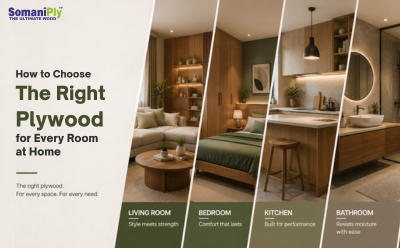
How to Choose the Right Plywood for Every Room at Home Choosing plywood for a home is not only about selecting the most expensive sheet. Different rooms face different levels of moisture, heat, weight, and daily use. The plywood suitable for a bedroom wardrobe may not be the best choice for kitchen cabinets or bathroom storage. Using the correct plywood in each room helps improve furniture life, reduce repairs and provide better value for money. Before buying plywood, consider where it will be used, how much moisture the area receives and how much load the furniture must carry. Why Does Plywood Selection Matter? Plywood is made by bonding thin layers of wood veneer together. Its performance depends on the quality of the veneers, adhesive, manufacturing process and plywood grade. Using the wrong plywood can lead to: Swelling and bending Peeling of layers Weak furniture joints Termite or borer damage Difficulty opening cabinet shutters Reduced furniture life Frequent repair and replacement costs Selecting plywood according to the room helps prevent these problems. Understand the Main Types of Plywood Before choosing plywood for individual rooms, it is important to understand the common grades available. Commercial-grade plywood Commercial plywood is generally used for indoor furniture in dry areas. It is suitable for bedrooms, living rooms and study rooms where there is limited exposure to water. It may be used for: Wardrobes Bookshelves Study tables TV units Storage cabinets Dressing tables Commercial plywood is usually more affordable than waterproof plywood, but it should not be used in continuously damp areas. Moisture-resistant plywood Moisture-resistant plywood can handle occasional humidity and limited moisture exposure. However, moisture-resistant does not mean completely waterproof. It may be considered for: Bedroom furniture Living-room furniture Office furniture Dining-room storage Low-moisture wall panelling It should not be used near kitchen sinks, bathroom plumbing or areas exposed to water leakage. Boiling-water-resistant plywood Boiling-water-resistant plywood offers better moisture resistance than standard commercial plywood. It is commonly used in areas where furniture may face humidity or occasional water contact. It may be suitable for: Kitchen cabinets away from the sink Utility-room storage Dining-room cabinets Furniture near moderately damp walls Interior applications in humid locations Boiling-waterproof plywood Boiling-waterproof plywood is designed for high-moisture areas. It is generally preferred for kitchens, bathrooms and other spaces where furniture may regularly face water or steam. Common applications include: Kitchen cabinets Sink units Bathroom vanities Utility-area cabinets Furniture near wet walls Storage in high-humidity spaces Marine plywood Marine plywood provides strong resistance to water and moisture when manufactured according to appropriate quality standards. It may be considered for highly moisture-prone applications. However, genuine marine plywood can be more expensive, so it should be used where its performance is genuinely required. Choosing Plywood for the Living Room The living room usually contains TV units, display shelves, centre tables, wall panels and storage cabinets. These furniture pieces require good appearance, dimensional stability and the ability to hold moderate weight. Commercial-grade or moisture-resistant plywood may be suitable for most living-room furniture, provided the room is dry and properly ventilated. For large TV units and wall-mounted cabinets, choose plywood with sufficient thickness and good screw-holding capacity. Important factors include: Surface smoothness Strength and stability Resistance to bending Compatibility with laminate or veneer Ability to support electronics and décor items If the living-room wall has a history of dampness, consider a higher moisture-resistant grade and maintain a gap between the furniture and the wall. Choosing Plywood for the Bedroom Bedroom furniture commonly includes wardrobes, beds, dressing tables, side tables and storage units. These pieces are usually not exposed to direct water, so commercial or moisture-resistant plywood may be sufficient. For wardrobes, select plywood that remains stable and can hold hinges, shelves and internal fittings securely. For beds, structural strength is more important because the plywood must support regular weight and movement. Consider using thicker plywood for: Bed platforms Long wardrobe shelves Loft storage Large drawers Heavy internal compartments Avoid selecting very thin plywood for wide shelves, as it may bend under the weight of clothes, books or luggage. Choosing Plywood for the Kitchen The kitchen is one of the most moisture-prone areas in a home. Cabinets are exposed to water, steam, heat, food spills and plumbing leakage. Boiling-waterproof plywood is generally a better choice for kitchen furniture, particularly near the sink and countertop. Special attention should be given to: Cabinets below the sink Countertop support units Cabinets near water purifiers Storage near plumbing lines Units close to the stove Cabinets near exterior walls The under-sink cabinet faces the highest risk because even a small pipe leak can damage the plywood over time. All cut edges, drilled holes and joints should be properly sealed. Laminates alone may not protect the plywood if water enters through exposed edges. Choosing Plywood for the Bathroom Bathroom furniture faces regular humidity, steam and water splashes. Standard commercial plywood is not recommended for such conditions. Use boiling-waterproof or suitable marine-grade plywood for: Vanity cabinets Mirror storage units Under-sink cabinets Wall-mounted bathroom storage Utility shelves Even waterproof plywood should not remain in direct contact with standing water. Seal all edges and keep cabinets raised above the floor. Good ventilation and proper waterproofing of bathroom walls are equally important. Plywood cannot remain durable if there is continuous plumbing leakage or water seepage. Choosing Plywood for the Dining Room Dining-room furniture may include dining tables, crockery units, cabinets and serving counters. These pieces face occasional food or water spills but are generally used in dry indoor conditions. Commercial-grade or moisture-resistant plywood may be suitable for crockery units and display cabinets. For dining tables, focus on: Thickness Strength Resistance to bending Surface finish Edge protection A protective laminate, veneer or polished finish can help reduce damage from minor spills. Clean any liquid immediately instead of allowing it to remain on the surface. Choosing Plywood for the Children’s Room Furniture in a children’s room should be strong, smooth and easy to maintain. Beds, study tables, toy storage units and wardrobes may face rough use. Choose
Why Architects Value GreenPro Certified Building Materials
Why Architects Value GreenPro Certified Building Materials Why Architects Prioritize GreenPro Certified Building Materials Architecture has evolved far beyond designing visually appealing buildings. Today’s architects are responsible for creating spaces that balance functionality, durability, environmental responsibility, and long-term performance. Every material specified during the design stage contributes to the overall quality, sustainability, and lifecycle of a project. Material specification has therefore become one of the most important responsibilities of an architect. From residential homes and commercial offices to hospitality spaces, healthcare facilities, educational institutions, and retail environments, selecting the right building materials influences everything from occupant well-being to maintenance requirements and environmental impact. As sustainable construction becomes an industry standard, architects increasingly prefer products backed by credible environmental certifications. These certifications help verify that a product meets recognized sustainability standards while supporting responsible manufacturing practices. Among these, GreenPro Certification has emerged as one of India’s most respected eco-labels for building materials. Developed by the Confederation of Indian Industry (CII) through the Indian Green Building Council (IGBC), GreenPro enables architects to identify environmentally responsible products that support sustainable construction without compromising on quality or performance. At SomaniPly, our commitment to sustainability extends beyond manufacturing premium plywood. Alongside GreenPro Certification, our products are supported by Environmental Product Declaration (EPD), FSC, Low VOC, and Low Emission certifications, enabling architects to make informed material specifications for projects that prioritize both performance and environmental responsibility. How GreenPro Certification Simplifies Material Specification Every construction project involves hundreds of material decisions. Architects evaluate products based on structural performance, aesthetics, durability, cost, maintenance, sustainability, and client expectations before finalizing specifications. Without independent certification, comparing products can become challenging. Manufacturers often promote environmental claims, but architects require credible evidence before recommending materials for a project. GreenPro Certification simplifies this process by providing an independently recognized benchmark for environmentally responsible building materials. Rather than relying solely on marketing statements, architects can specify products that have been evaluated against established sustainability criteria. This makes material specification more transparent, allowing architects to recommend certified products with greater confidence. GreenPro Certification also supports collaboration across the project team. Developers, consultants, contractors, and clients can clearly understand why a particular material has been selected, making the specification process more objective and transparent. How GreenPro Helps Architects During Material Selection During the design phase, architects often compare multiple products before preparing project specifications. GreenPro Certification provides valuable support by simplifying environmental evaluation alongside technical performance. Architectural Challenge How GreenPro Helps Material specification Provides independently verified environmental credentials. Product comparison Enables architects to evaluate certified products using recognized sustainability standards. Sustainable design goals Supports environmentally responsible material selection. Client presentations Strengthens recommendations through third-party certification. Project documentation Adds transparency during specification and procurement. Long-term project value Encourages responsible manufacturing and sustainable construction practices. This structured evaluation process allows architects to make decisions based on measurable environmental standards rather than relying solely on product claims. How GreenPro Supports Sustainable Architecture Sustainable architecture considers the environmental impact of every material used throughout a building’s lifecycle. While energy-efficient systems and innovative design techniques play an important role, responsible material selection is equally essential. GreenPro-certified building materials help architects incorporate sustainability into projects from the earliest stages of design. By specifying certified materials, architects contribute to environmentally responsible construction practices while maintaining the durability and performance expected in modern buildings. Whether designing premium residences, office spaces, hospitality projects, healthcare facilities, educational institutions, or commercial interiors, GreenPro-certified plywood supports architects in creating buildings that align with contemporary sustainability objectives. As demand for sustainable construction continues to grow, GreenPro Certification has become an important consideration during material specification for projects across multiple sectors. Why Architects Value Transparency in Building Materials Today’s clients are better informed than ever before. Homeowners, developers, businesses, and institutions increasingly ask questions about the products being used in their projects. They want to understand: Where materials are sourced. How products are manufactured. Whether environmental claims are independently verified. How building materials contribute to sustainable construction. Architects are expected to provide clear and credible answers. This growing demand has made transparency an essential part of product evaluation. Rather than relying on promotional messaging, architects increasingly prefer manufacturers who openly communicate their environmental commitments through recognized certifications. GreenPro Certification offers that transparency by confirming that a product has been assessed against established environmental criteria. It enables architects to recommend products with greater confidence while supporting responsible material specification. How GreenPro Helps Architects Build Client Confidence Architects play an important advisory role throughout every construction project. Clients depend on their expertise when selecting materials that balance aesthetics, performance, sustainability, and long-term value. Recommending GreenPro-certified building materials helps strengthen this relationship because the recommendation is supported by an independently recognized certification rather than a manufacturer claim alone. For residential projects, homeowners gain confidence that environmentally responsible products have been selected for their interiors. For commercial developments, developers appreciate material recommendations that align with sustainable construction practices and responsible procurement. For institutional projects such as schools, hospitals, and office spaces, GreenPro Certification demonstrates a commitment to quality, transparency, and environmental responsibility. This confidence extends beyond project completion, helping architects build long-term trust with clients through informed and responsible material recommendations. Why GreenPro-Certified Building Materials Matter Across Different Project Types The value of GreenPro Certification extends across a wide range of architectural projects. Regardless of the building type, architects benefit from specifying materials that combine environmental responsibility with dependable performance. GreenPro-certified plywood is well suited for applications including: Modular kitchens Wardrobes Residential furniture Commercial workspaces Office interiors Hospitality projects Educational institutions Healthcare facilities Retail environments Interior partitions Wall paneling Storage solutions By incorporating certified plywood into these applications, architects can create functional, durable, and environmentally responsible spaces that meet modern design expectations. Why Architects Choose Manufacturers Committed to Sustainability Selecting the right building material goes beyond comparing product specifications. Architects also evaluate the manufacturer behind the product, considering their commitment to quality, innovation, environmental responsibility, and consistent manufacturing standards. As sustainability becomes a core requirement in modern construction, architects increasingly prefer manufacturers
Why Environmental Product Declarations Matter More Than Ever

Why Environmental Product Declarations Matter More Than Ever The Growing Importance of Environmental Transparency in Construction The construction industry is undergoing a significant transformation. While strength, durability, and design continue to influence material selection, environmental transparency has become an equally important consideration. Architects, project consultants, builders, and homeowners are increasingly looking beyond product specifications to understand how building materials are manufactured and what impact they have on the environment. This growing awareness has led to a greater demand for independently verified environmental information. Rather than relying solely on marketing claims, professionals now seek credible data that helps them compare products and make informed decisions. One of the most trusted tools supporting this shift is the Environmental Product Declaration (EPD). An Environmental Product Declaration provides standardized and independently verified information about a product’s environmental impact throughout its lifecycle. It enables manufacturers to communicate environmental performance with transparency while giving customers confidence that the information is based on recognized international standards. As sustainability becomes a defining factor in modern construction, Environmental Product Declarations are helping create a more transparent and accountable building industry. What Is an Environmental Product Declaration (EPD)? An Environmental Product Declaration (EPD) is a standardized document that communicates the environmental impact of a product throughout its lifecycle. It is developed using internationally recognized methodologies and independently verified to ensure the information is accurate, objective, and transparent. Unlike product brochures or marketing materials, an EPD does not promote a product. Instead, it presents measurable environmental data in a consistent format, allowing architects, consultants, and procurement teams to evaluate products based on factual information. For building materials such as plywood, an Environmental Product Declaration offers valuable insights into the environmental footprint associated with manufacturing, resource consumption, emissions, and other lifecycle considerations. This enables project teams to compare products fairly while supporting responsible material selection. An EPD has become an important reference for professionals who want greater transparency during the specification and procurement process. Why Environmental Product Declarations Matter Today Sustainability expectations within the construction industry have changed significantly over the last decade. Developers, architects, and organizations are increasingly expected to demonstrate environmental responsibility throughout every stage of a project, including the selection of building materials. This shift has made environmental transparency more valuable than ever before. Rather than asking manufacturers to simply state that a product is environmentally responsible, project teams now seek independently verified documentation that supports those claims. Environmental Product Declarations address this need by providing objective environmental information in a format that can be consistently evaluated across different products. As more residential, commercial, educational, healthcare, and hospitality projects adopt sustainable building practices, EPDs have become an important decision-making tool for selecting materials with greater confidence. How Environmental Product Declarations Help the Construction Industry An Environmental Product Declaration creates value for every stakeholder involved in a construction project by making environmental information easier to understand and compare. For Architects and Consultants Architects and consultants use EPDs during the material specification process to compare products using verified environmental data. This supports informed design decisions while helping projects meet sustainability objectives. For Builders and Contractors Builders benefit from greater confidence when selecting products supported by independently verified environmental information. This improves procurement decisions and strengthens project transparency. For Project Developers Developers increasingly prioritize environmentally responsible construction practices. Environmental Product Declarations provide documented environmental information that supports responsible material selection across residential and commercial developments. For Homeowners Homeowners are becoming more conscious about the products used in their homes. An Environmental Product Declaration offers reassurance that a product’s environmental performance has been independently evaluated rather than simply promoted through advertising. What Information Does an Environmental Product Declaration Include? While every Environmental Product Declaration is prepared according to applicable Product Category Rules (PCRs), most EPDs include standardized environmental information that enables objective product evaluation. EPD Information Why It Matters Raw Material Information Demonstrates transparency in material sourcing. Manufacturing Process Provides insight into responsible production practices. Energy and Resource Consumption Shows how resources are used during manufacturing. Environmental Emissions Reports environmental impacts associated with production. Product Lifecycle Assessment Evaluates environmental performance from production through the product lifecycle. Independent Verification Confirms the information has been reviewed by qualified third-party experts. This standardized approach allows architects, consultants, and project teams to evaluate building materials using consistent environmental information rather than relying on unverified sustainability claims. Why EPDs Are Becoming a Preferred Choice for Material Selection The way building materials are evaluated is evolving. Performance, durability, and aesthetics remain important, but environmental transparency is increasingly influencing purchasing decisions across the construction industry. An Environmental Product Declaration enables manufacturers to demonstrate accountability through independently verified environmental information. At the same time, it gives architects, project consultants, and customers a reliable basis for comparing products and selecting materials that align with their sustainability objectives. As environmental reporting becomes more common across the building materials industry, Environmental Product Declarations are expected to play an even greater role in supporting informed, transparent, and responsible construction practices. Why Homeowners Should Pay Attention to Environmental Product Declarations Environmental Product Declarations are no longer relevant only to architects and large commercial projects. As homeowners become more informed about the products they use, environmental transparency is becoming an important part of purchasing decisions. Whether building a new home or renovating an existing one, many homeowners want to understand where products come from, how they are manufactured, and whether they support responsible environmental practices. An Environmental Product Declaration provides this confidence by presenting independently verified environmental information in a transparent and standardized format. Choosing plywood backed by an EPD allows homeowners to make informed decisions based on credible data rather than marketing claims. It also reflects a growing preference for products that balance quality, durability, and environmental responsibility. Environmental Product Declarations Complement Other Sustainability Certifications An Environmental Product Declaration is often confused with sustainability certifications, but they serve different purposes. An EPD focuses on providing verified environmental information, while other certifications evaluate specific aspects of sustainability or product performance. Together, they offer a more complete
How India’s Plywood Industry Has Evolved Since 1947

How India’s Plywood Industry Has Evolved Since 1947 When India gained independence in 1947, the country’s infrastructure and manufacturing sectors were in the early stages of development. Demand for housing, commercial buildings, educational institutions, and public infrastructure was steadily increasing, creating a growing need for reliable construction materials. Among these materials, plywood emerged as one of the most versatile products, offering strength, durability, and flexibility across a wide range of applications. Over the past seven decades, India’s plywood industry has transformed from a small manufacturing sector into one of the world’s largest producers of plywood and engineered panel products. Advancements in technology, changing consumer expectations, improved manufacturing standards, and increasing awareness of sustainability have reshaped the industry at every stage. Today, plywood is no longer viewed as just a structural material. It has become an essential component of modern homes, commercial interiors, hospitality projects, healthcare facilities, educational institutions, and infrastructure development. Manufacturers such as SomaniPly continue contributing to this evolution by combining innovation, quality manufacturing, and internationally recognized sustainability certifications including GreenPro, Environmental Product Declaration (EPD), FSC, Low VOC, and Low Emission. The Early Years: Building a New Nation Following independence, India’s focus was centred on nation building. Large-scale housing developments, public infrastructure, educational institutions, and industrial growth created significant demand for construction materials. During this period, plywood was primarily used for basic furniture manufacturing, doors, partitions, and construction support. Production methods relied heavily on manual processes, and product availability was relatively limited compared to today’s standards. As urban centres expanded throughout the 1950s and 1960s, plywood manufacturers gradually increased production capacity to meet growing domestic demand. At the same time, improvements in machinery and manufacturing techniques began laying the foundation for a more organized industry. Industrial Growth and Technological Advancement By the 1970s and 1980s, India’s manufacturing sector experienced considerable modernization. Improved machinery, better adhesive technologies, and stricter quality control allowed manufacturers to produce stronger, more reliable plywood products suitable for diverse applications. The role of plywood also expanded significantly. Instead of serving only residential furniture, plywood became an important material for commercial buildings, offices, transportation, educational institutions, and hospitality projects. Builders and architects increasingly valued plywood for its versatility, dimensional stability, and ease of fabrication. This period marked the beginning of application-specific plywood products that addressed varying environmental and structural requirements. Meeting the Needs of Modern Construction The liberalization of the Indian economy during the 1990s accelerated growth across the real estate and infrastructure sectors. Residential developments, shopping malls, hotels, airports, hospitals, and corporate offices increased demand for premium interior materials. As expectations evolved, manufacturers responded by developing plywood grades tailored to specific applications. Today, modern projects utilize products such as moisture-resistant plywood for kitchens and wardrobes, waterproof plywood for high-humidity environments, fire-retardant plywood for enhanced safety, flexible plywood for curved furniture, film-faced shuttering plywood for construction, and decorative prelaminated plywood for contemporary interiors. This diversification has enabled architects, interior designers, and builders to specify materials based on functional requirements rather than adopting a single solution for every project. The Evolution of Plywood Applications The expanding role of plywood across industries reflects how significantly the sector has evolved over the decades. Industry Typical Applications Today Residential Modular kitchens, wardrobes, furniture, TV units Commercial Office furniture, workstations, meeting rooms Hospitality Hotels, restaurants, resorts Healthcare Hospitals, clinics, laboratories Education Schools, colleges, libraries Retail Display units, showrooms, counters Infrastructure Concrete formwork, temporary structures Industrial Transport, fabrication The diversity of applications demonstrates that modern plywood manufacturers must deliver specialized solutions capable of meeting varied technical and design requirements. Sustainability Reshapes the Industry One of the most significant changes in recent decades has been the industry’s growing commitment to sustainability. Earlier, purchasing decisions were primarily based on price and durability. Today, homeowners, architects, developers, and commercial organizations also evaluate environmental responsibility, indoor air quality, and responsible sourcing before selecting materials. This shift has encouraged manufacturers to adopt sustainable production practices while pursuing internationally recognized certifications that demonstrate environmental accountability. At SomaniPly, this commitment is reflected through certifications such as GreenPro, Environmental Product Declaration (EPD), FSC, Low VOC, and Low Emission, helping customers choose plywood that supports healthier indoor environments and responsible construction. These certifications not only strengthen customer confidence but also align with the growing demand for green buildings and environmentally conscious design. Innovation Continues to Drive Growth Technology continues transforming every stage of plywood manufacturing. Advanced production systems now enable greater precision, improved bonding, enhanced moisture resistance, better surface finishes, and more consistent product quality. Automation has increased manufacturing efficiency while helping maintain strict quality standards across product lines. Innovation has also expanded product diversity. Modern manufacturers now offer specialized plywood for interior furniture, premium decorative applications, construction formwork, transportation, industrial flooring, and custom architectural designs. This continuous product development ensures that plywood remains one of the most versatile materials used in contemporary construction and interior design. Looking Ahead: The Future of India’s Plywood Industry The future of India’s plywood industry will be shaped by sustainability, innovation, and responsible manufacturing. As cities continue expanding and demand for modern infrastructure grows, manufacturers will increasingly focus on developing products that combine performance with environmental responsibility. Homeowners are becoming more informed about the materials they choose, while architects and developers are prioritizing certified products that contribute to healthier buildings and sustainable construction practices. Digital manufacturing technologies, improved resource efficiency, and transparent environmental reporting are expected to become even more important over the coming years. Manufacturers that invest in innovation while maintaining high-quality standards will continue leading the industry’s growth. Companies like SomaniPly are already embracing this future by combining advanced manufacturing with globally recognized certifications that support durability, transparency, and sustainable development. Conclusion India’s plywood industry has undergone remarkable transformation since 1947. From supporting the country’s early infrastructure needs to becoming an essential part of modern architecture and interior design, plywood has continually adapted to changing technologies, customer expectations, and sustainability goals. Today, premium plywood is defined not only by its strength and durability but also by responsible manufacturing, environmental transparency, and application-specific innovation.
The Growing Portfolio of SomaniPly Across Industries
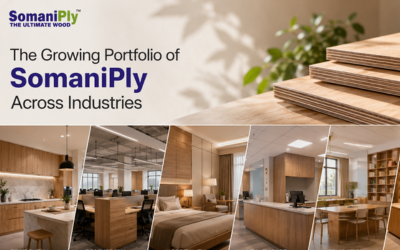
The Growing Portfolio of SomaniPly Across Industries Plywood has evolved far beyond its traditional role in furniture manufacturing. Today, it is an essential building material used across residential, commercial, industrial, hospitality, healthcare, retail, and infrastructure projects. As industries continue to demand materials that combine durability, aesthetics, sustainability, and long-term performance, the role of premium plywood has become increasingly significant. Every project presents unique challenges. A modular kitchen requires moisture-resistant plywood, while a commercial office needs furniture that withstands continuous daily use. Hotels prioritize elegant interiors with dependable durability, hospitals require materials that contribute to healthier indoor environments, and infrastructure projects rely on structural strength and reliability. Meeting these diverse requirements requires more than a single product. It requires a comprehensive portfolio of plywood solutions designed for specific applications. At SomaniPly, innovation and quality have driven the development of a diverse product range that serves multiple industries without compromising on performance. Backed by internationally recognized certifications such as GreenPro, Environmental Product Declaration (EPD), FSC, Low VOC, and Low Emission, SomaniPly manufactures premium plywood solutions that support modern construction while promoting responsible manufacturing and sustainable development. Why Different Industries Need Different Types of Plywood Selecting plywood is no longer simply about choosing a sheet of wood panel. Every industry has unique performance expectations, environmental conditions, and design objectives. The plywood used in a luxury hotel lobby differs from that used in concrete formwork, while furniture for healthcare facilities has different requirements from cabinetry in residential homes. Manufacturers therefore develop specialized plywood grades that address these specific challenges while maintaining consistent quality standards. For architects and designers, selecting the correct plywood ensures better structural integrity, longer furniture life, reduced maintenance, and improved project outcomes. Builders benefit from products that perform reliably throughout construction, while homeowners enjoy interiors that remain beautiful and functional for years. Rather than offering a one-size-fits-all solution, SomaniPly provides products engineered for different applications, helping professionals choose materials based on project requirements rather than compromise. Supporting Diverse Industries with Purpose-Built Solutions As construction methods and interior design continue evolving, the demand for specialized plywood has grown across every sector. SomaniPly’s product portfolio addresses these varying requirements while maintaining consistent manufacturing quality. Industry Common Applications Recommended SomaniPly Solutions Residential Modular kitchens, wardrobes, furniture, TV units MR Grade, BWR & BWP Grade, Prelaminated Commercial Offices, workstations, conference rooms Birch Grade, Prelaminated, Fire Retardant Hospitality Hotels, resorts, restaurants Fire Retardant, Birch Grade, Flexi Grade Healthcare Hospitals, clinics, laboratories Fire Retardant, Low VOC certified products Education Schools, colleges, libraries MR Grade, Fire Retardant Retail Display units, showrooms, counters Flexi Grade, Birch Grade, Prelaminated Infrastructure & Construction Formwork and structural applications Film Faced Shuttering Grade Industrial Applications Transport, fabrication Chequered Grade, Birch Grade This wide range enables architects, contractors, and interior designers to specify products that align with both technical performance and design expectations. Designed for Residential Living Modern homes demand furniture that balances aesthetics with everyday functionality. Kitchens are exposed to moisture, wardrobes require dimensional stability, and entertainment units must retain their appearance despite years of use. For these applications, MR Grade and BWR & BWP Grade plywood provide dependable performance, while Prelaminated Plywood offers decorative surfaces that simplify furniture manufacturing and reduce finishing time. For homeowners, selecting premium plywood is an investment in durability. Quality materials minimize repairs, reduce replacement costs, and preserve the appearance of interiors over time. Whether designing a new home or renovating an existing one, choosing application-specific plywood contributes to stronger furniture and better long-term value. Enabling Better Commercial Spaces Commercial interiors experience significantly higher daily usage than residential environments. Office workstations, conference rooms, retail displays, reception areas, and collaborative spaces require furniture that maintains its strength and appearance despite constant activity. Premium plywood provides the structural stability required for these demanding environments while supporting contemporary interior designs. Decorative finishes, precision machining, and consistent manufacturing quality enable designers to create commercial spaces that remain functional without compromising visual appeal. For businesses, investing in durable plywood also reduces maintenance interruptions and extends the service life of furniture, contributing to better operational efficiency. Supporting Hospitality, Healthcare, and Education Hotels, restaurants, hospitals, schools, and educational institutions each present unique design challenges. Hospitality spaces emphasize guest experience and refined interiors, while hospitals prioritize occupant well-being and safety. Educational institutions require furniture capable of withstanding continuous daily use across classrooms, libraries, and administrative spaces. These sectors increasingly value materials that combine durability with environmental responsibility. Products manufactured with Low VOC and Low Emission standards help contribute to healthier indoor environments, while Fire Retardant Plywood enhances safety in projects where fire performance is an important consideration. By combining product innovation with responsible manufacturing, SomaniPly helps these industries create spaces that are functional, comfortable, and built to perform over the long term. Meeting the Demands of Infrastructure and Industrial Projects Not every plywood application is visible once a project is complete. In construction and infrastructure, plywood often plays a critical role during the building process itself. Concrete formwork, temporary structures, transport flooring, and industrial fabrication require products that can withstand demanding site conditions while maintaining consistent performance. For such applications, Film Faced Shuttering Grade Plywood provides the strength and durability needed for repeated concrete casting, helping contractors achieve smoother finishes and improved construction efficiency. Similarly, Chequered Grade Plywood is designed for applications where slip resistance and durability are essential, making it suitable for transport vehicles, industrial flooring, and heavy-duty environments. These specialized products demonstrate how plywood continues to evolve beyond traditional furniture manufacturing, supporting industries that demand reliability under challenging conditions. Innovation That Supports Modern Design Interior design has moved beyond straight lines and conventional layouts. Curved furniture, sculptural reception desks, decorative wall features, and bespoke retail displays are becoming increasingly popular across residential and commercial projects. Meeting these creative expectations requires materials that offer flexibility without compromising strength. Flexi Grade Plywood enables architects and designers to create smooth curves and organic forms that would be difficult to achieve with conventional plywood. Likewise, Birch Grade Plywood is valued for its stability, fine finish, and machining